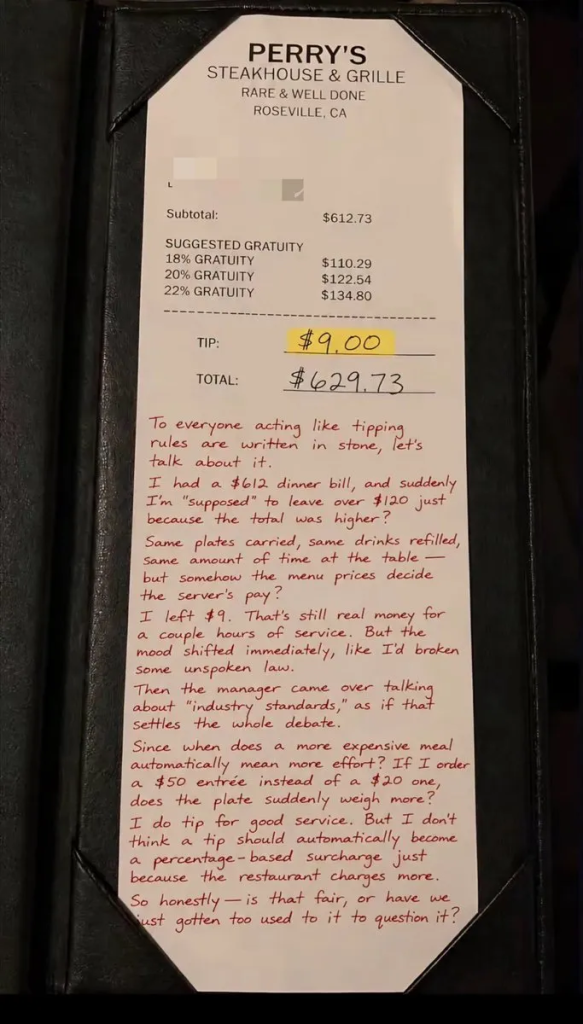
To everyone acting like tipping rules are written in stone, let’s talk about it.
I had a $612 dinner bill, and suddenly I’m “supposed” to leave over $120 just because the total was higher?
Same plates carried, same drinks refilled, same amount of time at the table — but somehow the menu prices decide the server’s pay?
I left $9. That’s still real money for a couple hours of service. But the mood shifted immediately, like I’d broken some unspoken law.
Then the manager came over talking about “industry standards,” as if that settles the whole debate.
Since when does a more expensive meal automatically mean more effort? If I order a $50 entrée instead of a $20 one, does the plate suddenly weigh more?
I do tip for good service. But I don’t think a tip should automatically become a percentage-based surcharge just because the restaurant charges more.
So honestly — is that fair, or have we just gotten too used to it to question it?
翻译参考
致所有把小费规矩奉为铁律的人,我们好好聊聊这件事。
我这顿饭账单 612 美元,难道就因为消费总额高,我就 “理应” 留下 120 多美元小费?
服务员端一样的盘子、续一样的酒水、在桌前服务时长完全相同 —— 凭什么菜品定价高低,决定服务员该拿多少酬劳?
我留了 9 美元小费,这好歹也是实打实的现金,对应几小时的服务。可店里气氛瞬间就变了,仿佛我触犯了某种不成文的规矩。
之后经理过来和我谈所谓 “行业标准”,好像这套标准就能盖棺定论。
从什么时候开始,贵的餐食就等同于服务员要付出更多劳动?我点一份 50 美元主菜,或是 20 美元的,盘子难道会凭空变重吗?
服务到位我一定会给小费,但我不认为,仅仅因为餐厅定价高,小费就该自动按百分比强制加收。
说实话:这真的公平吗?还是我们只是习惯了这套规则,便不再去质疑它?